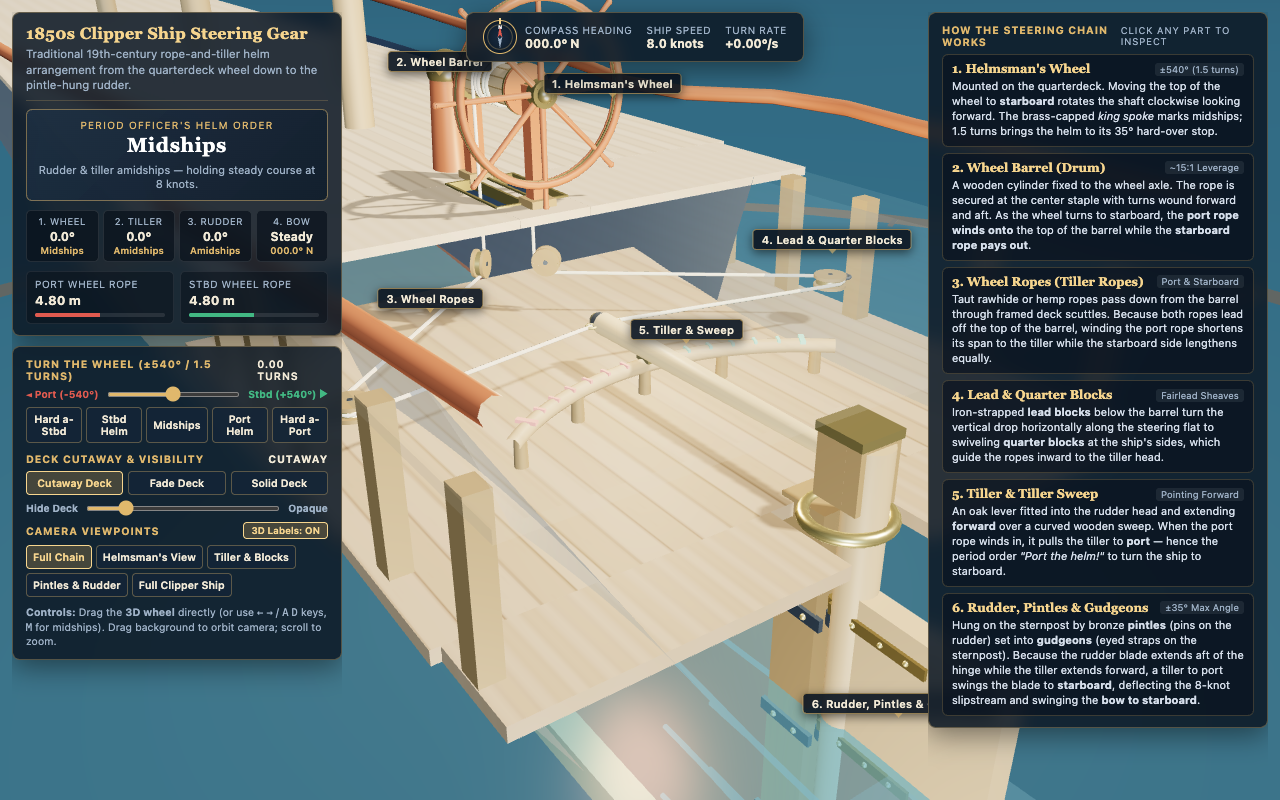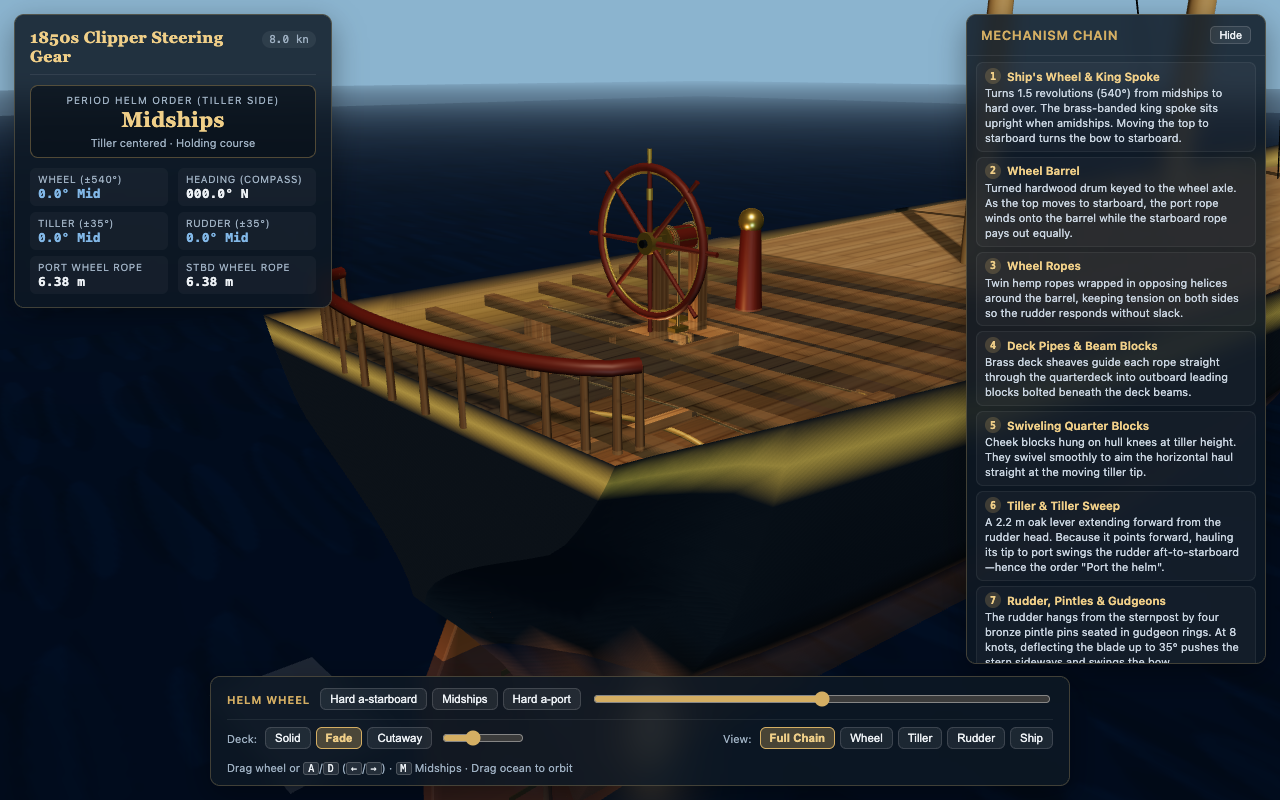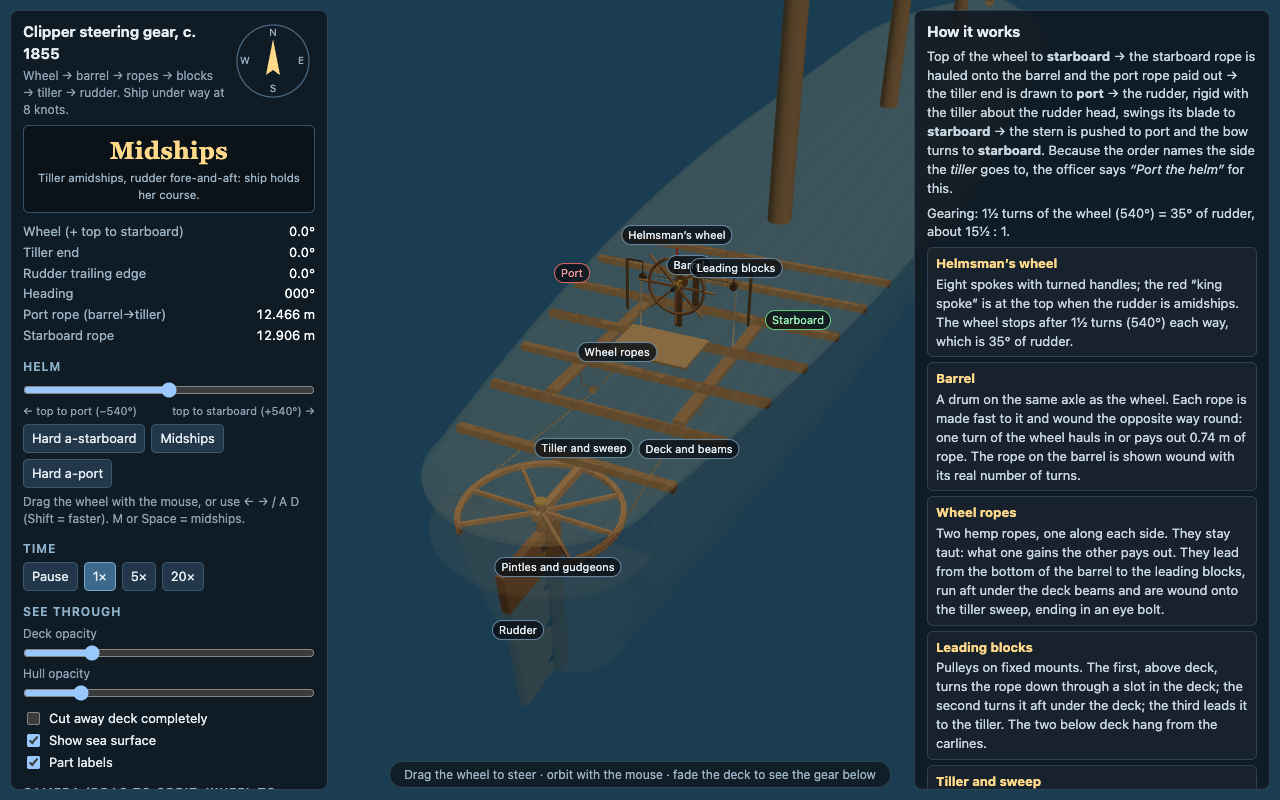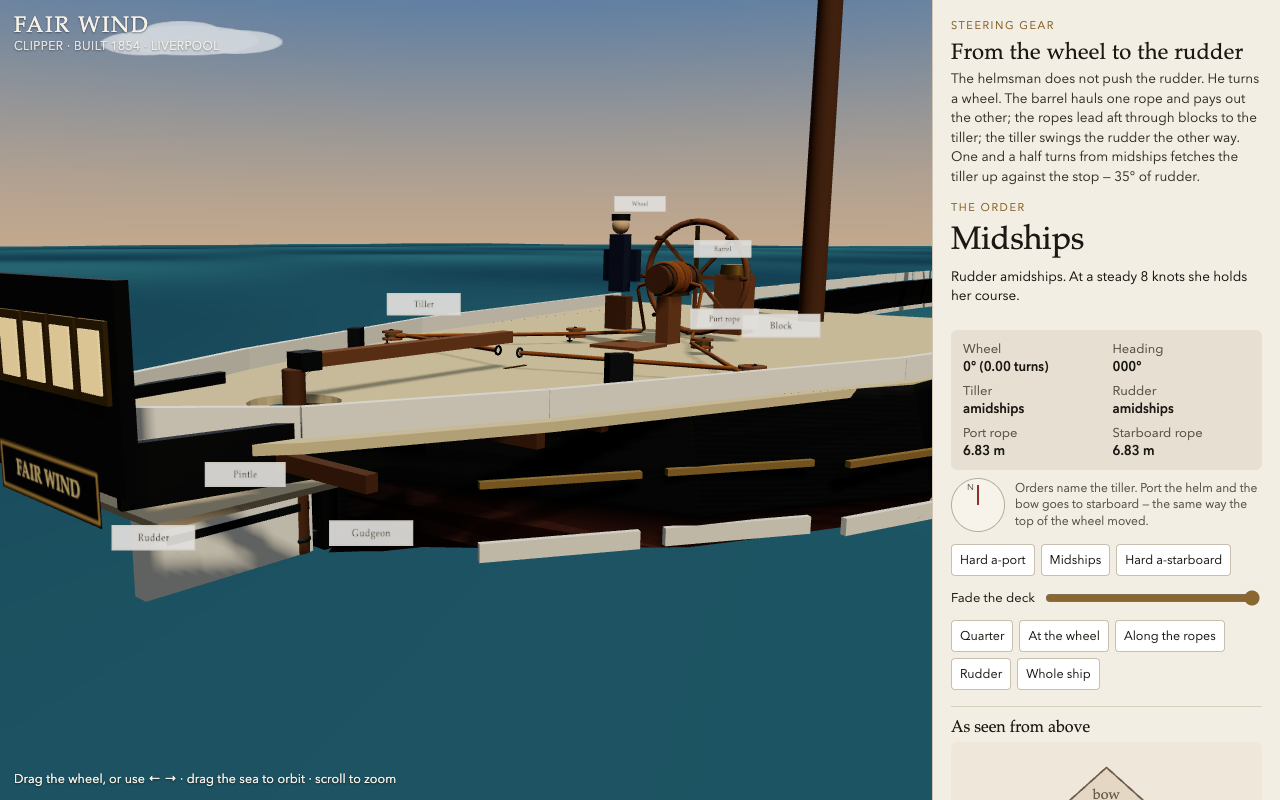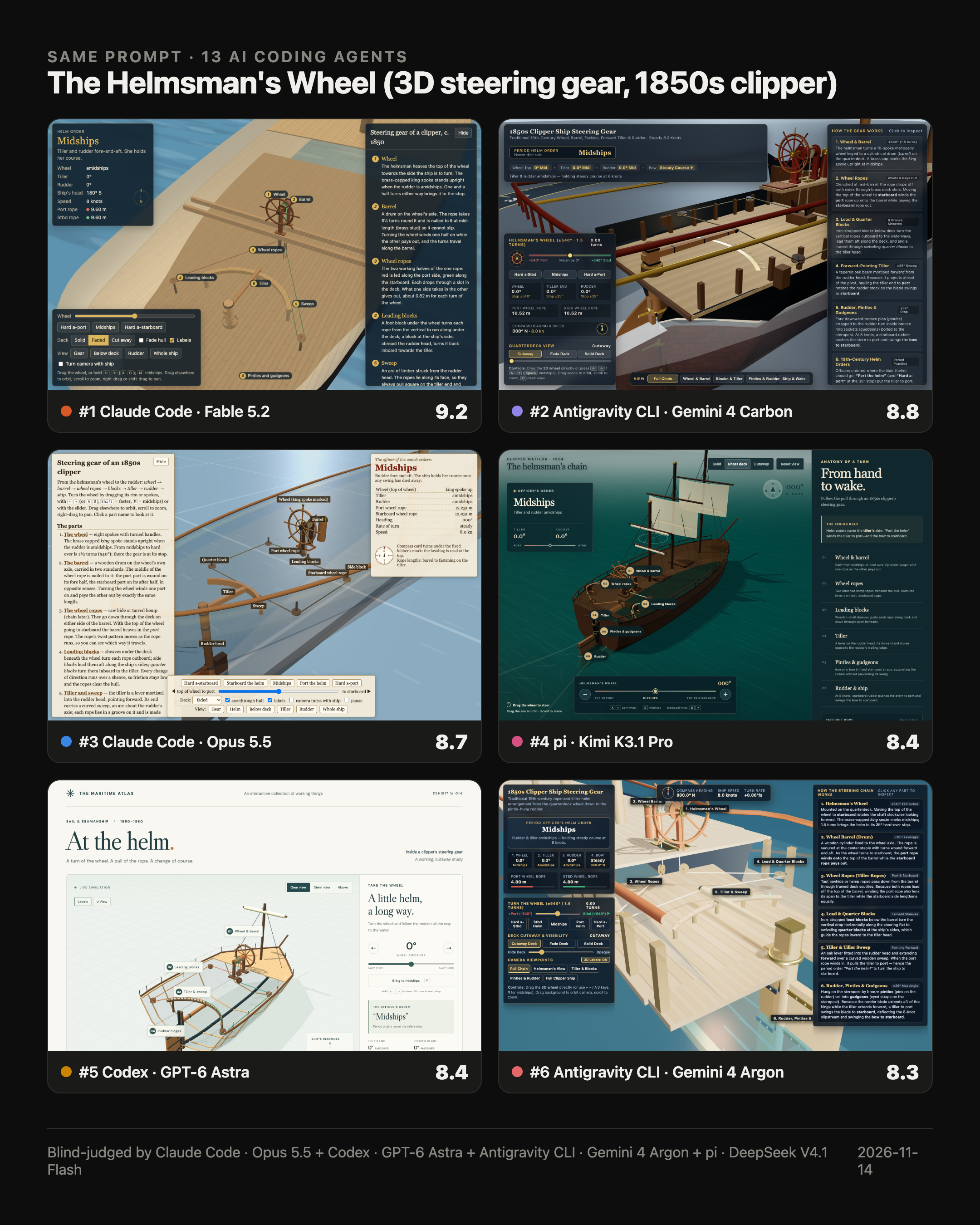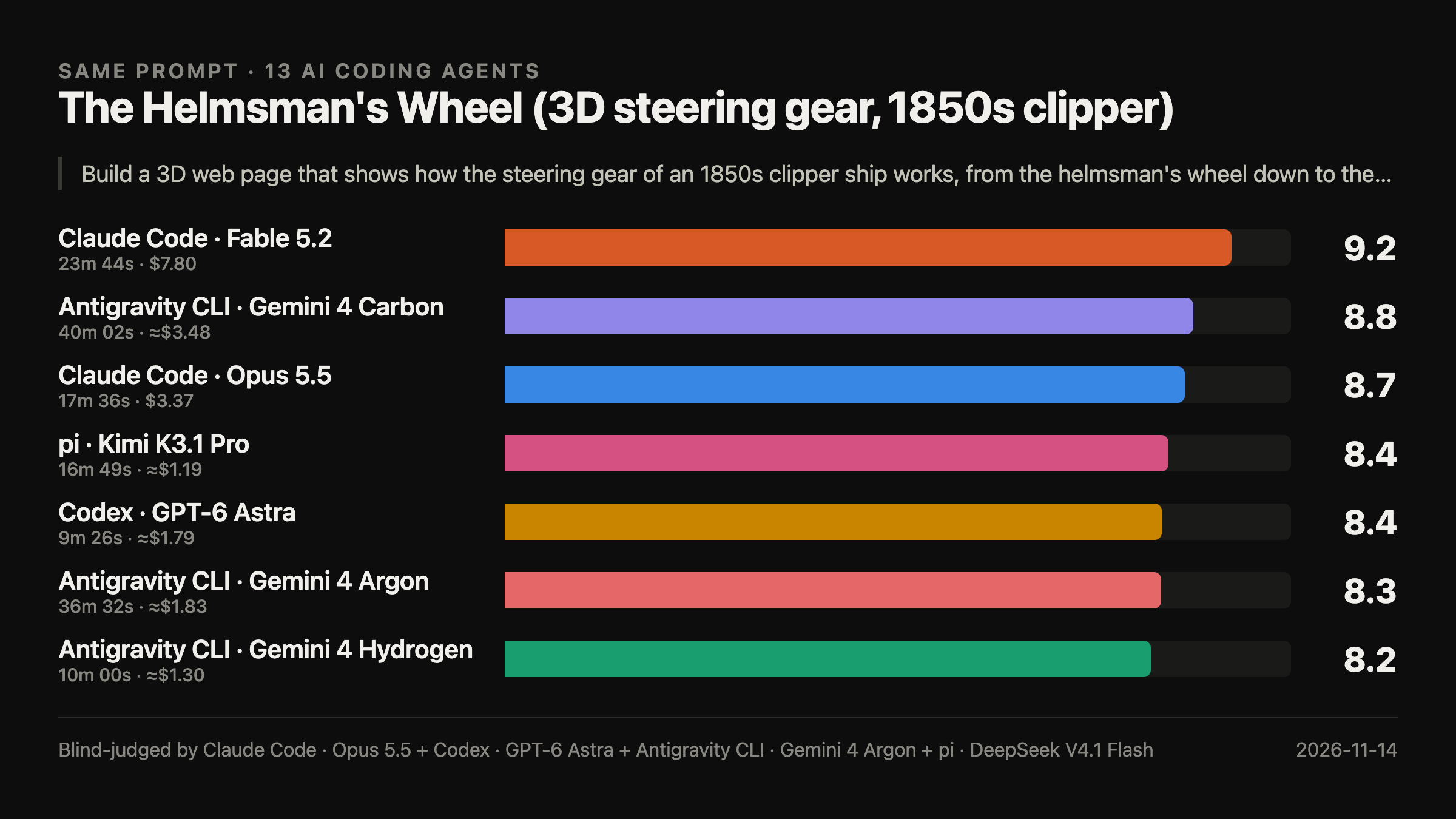
#1 Claude Code · Fable 5.29.2 /10
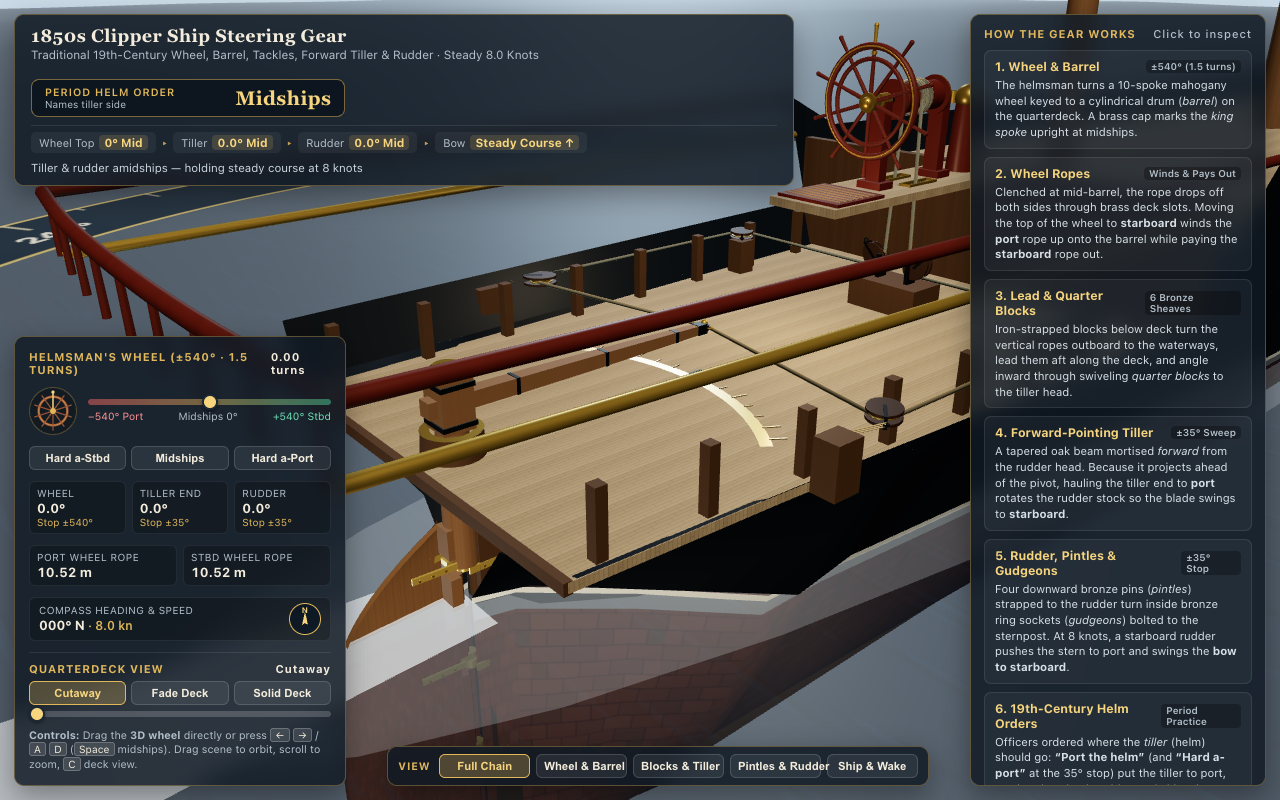
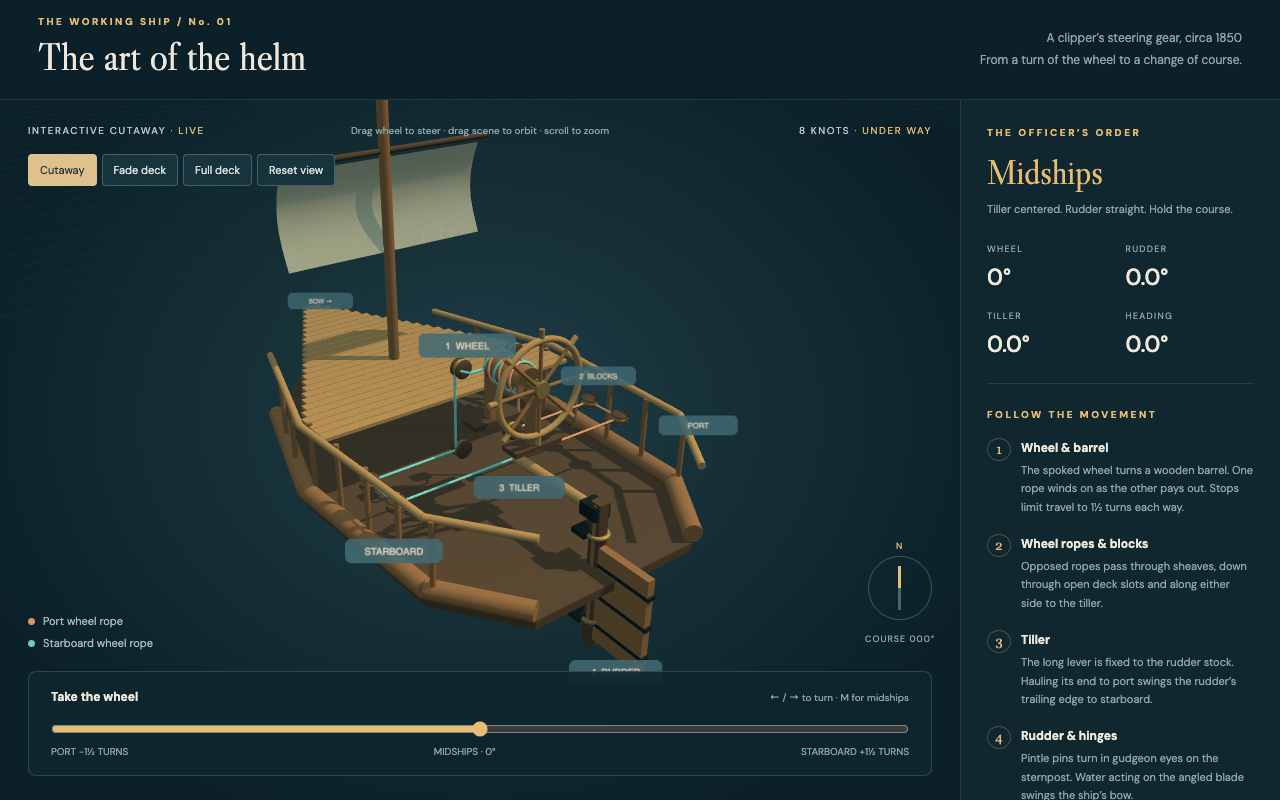
A well-engineered, correctly rigged steering chain with a rope model that keeps exact length; the visuals are adequate but plain.Claude Code · Opus 5.5
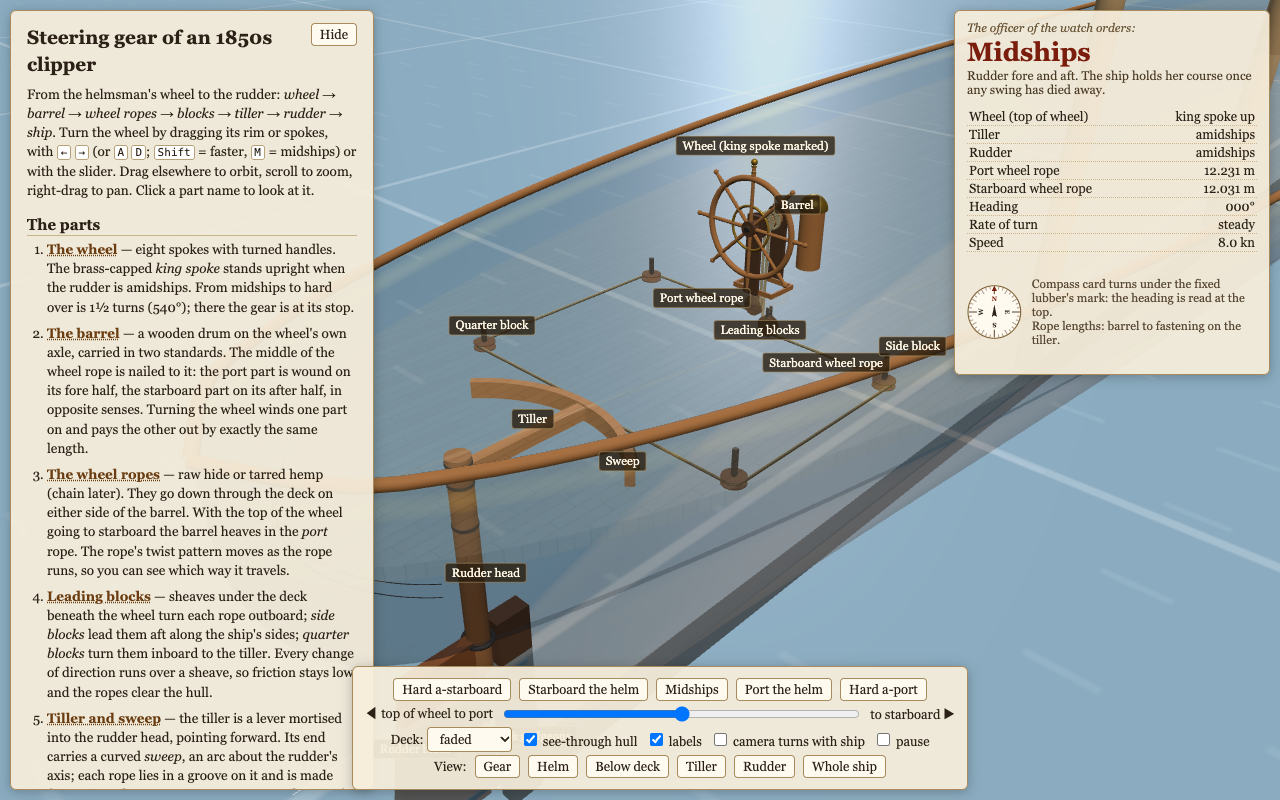
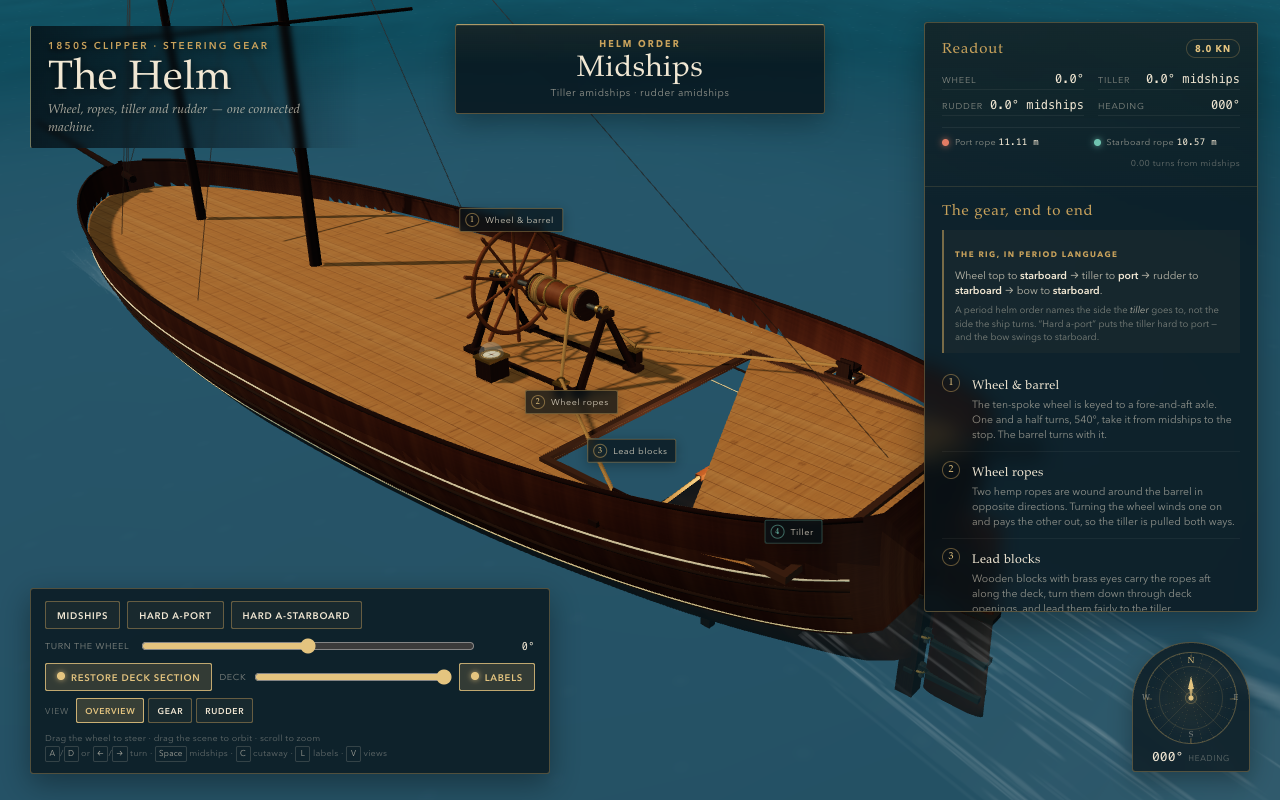
A carefully engineered steering demonstration with convincing mechanics, strong explanations, and somewhat crowded, plain presentation.Codex · GPT-6 Astra
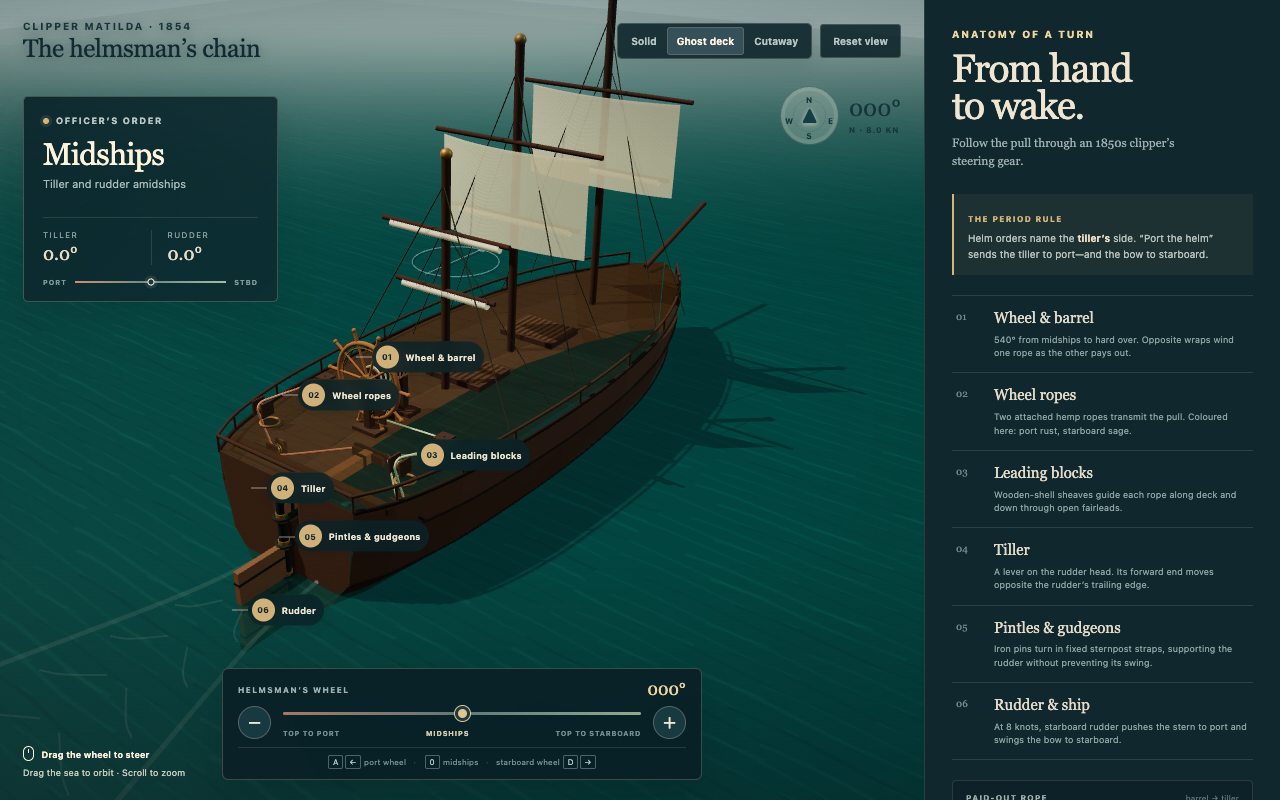
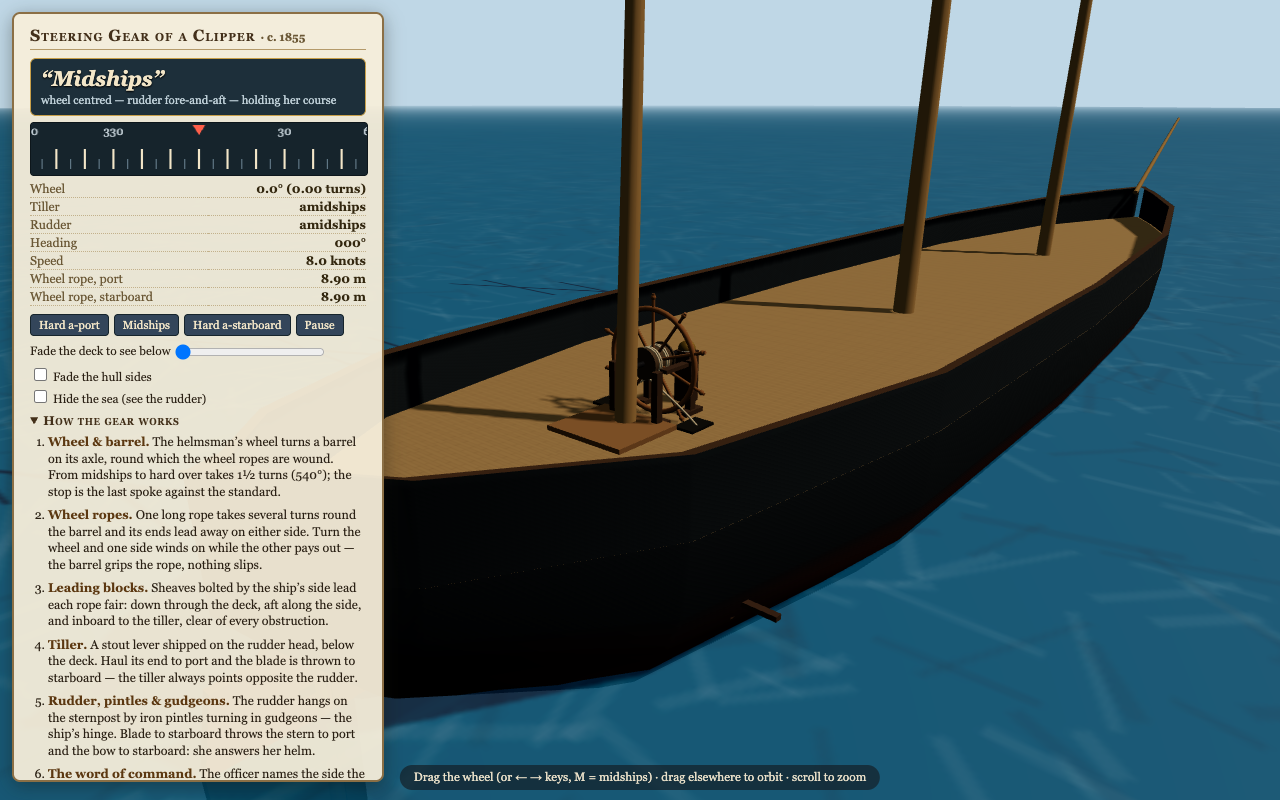
Geometrically exact, interactive 1850s clipper steering simulation with continuous helical rope physics and crystal-clear period explanations.Antigravity CLI · Gemini 4 Argon
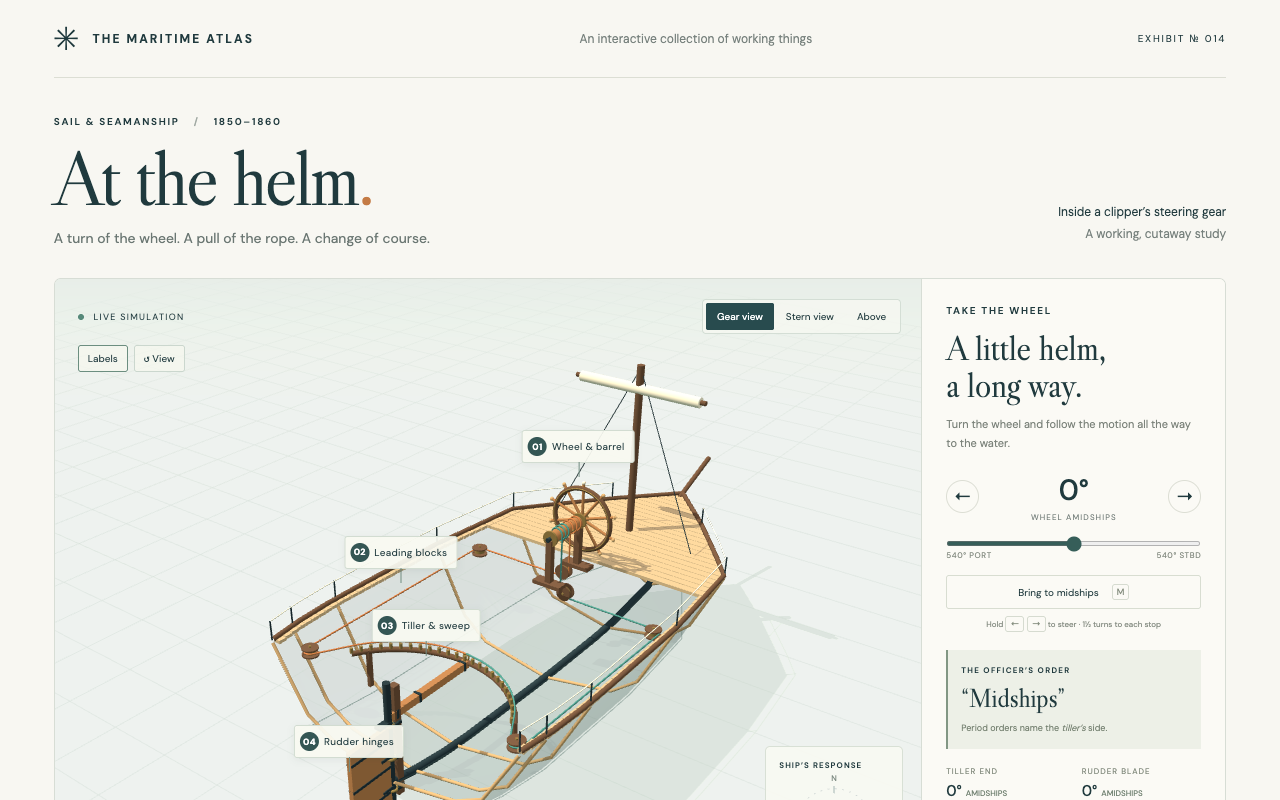
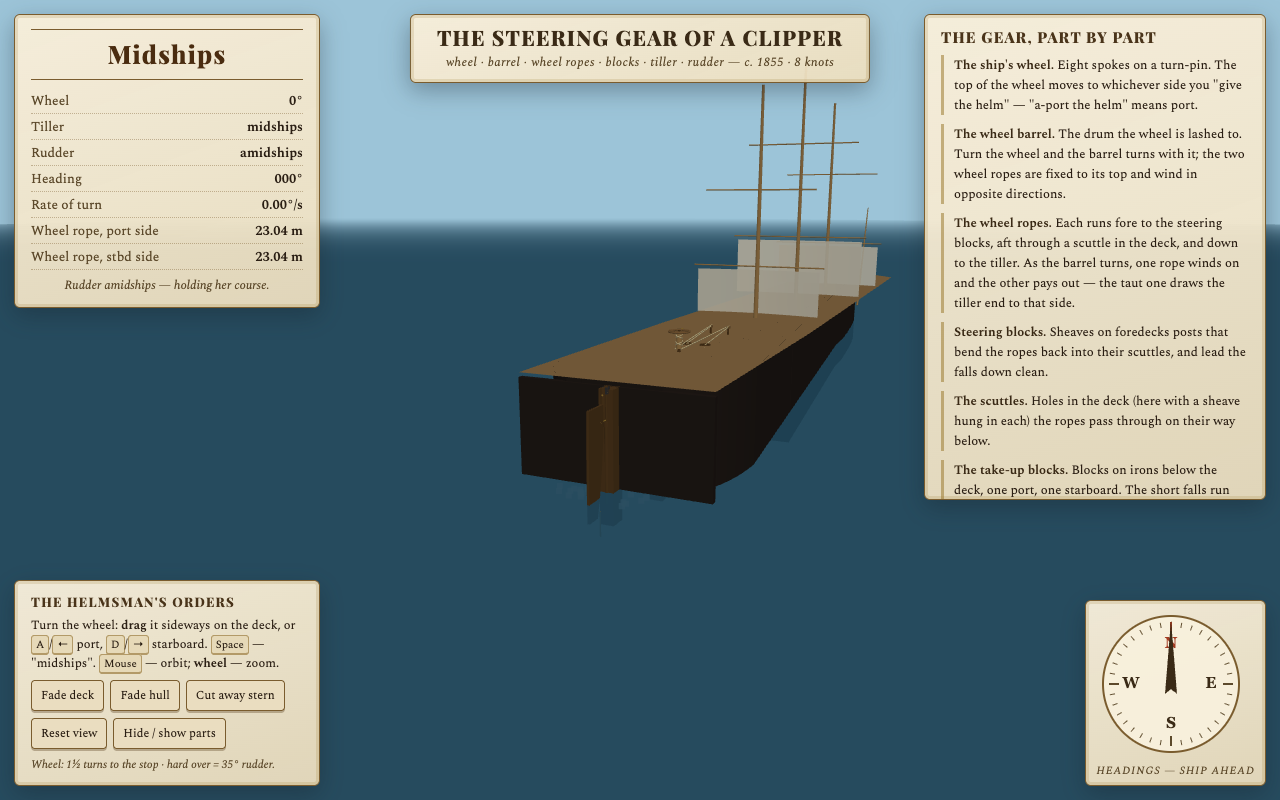
A meticulous, correctly rigged wheel-to-rudder chain; clear guides, but rudder views and hard-over wheel readability are weak.pi · DeepSeek V4.1 Flash
Strengths
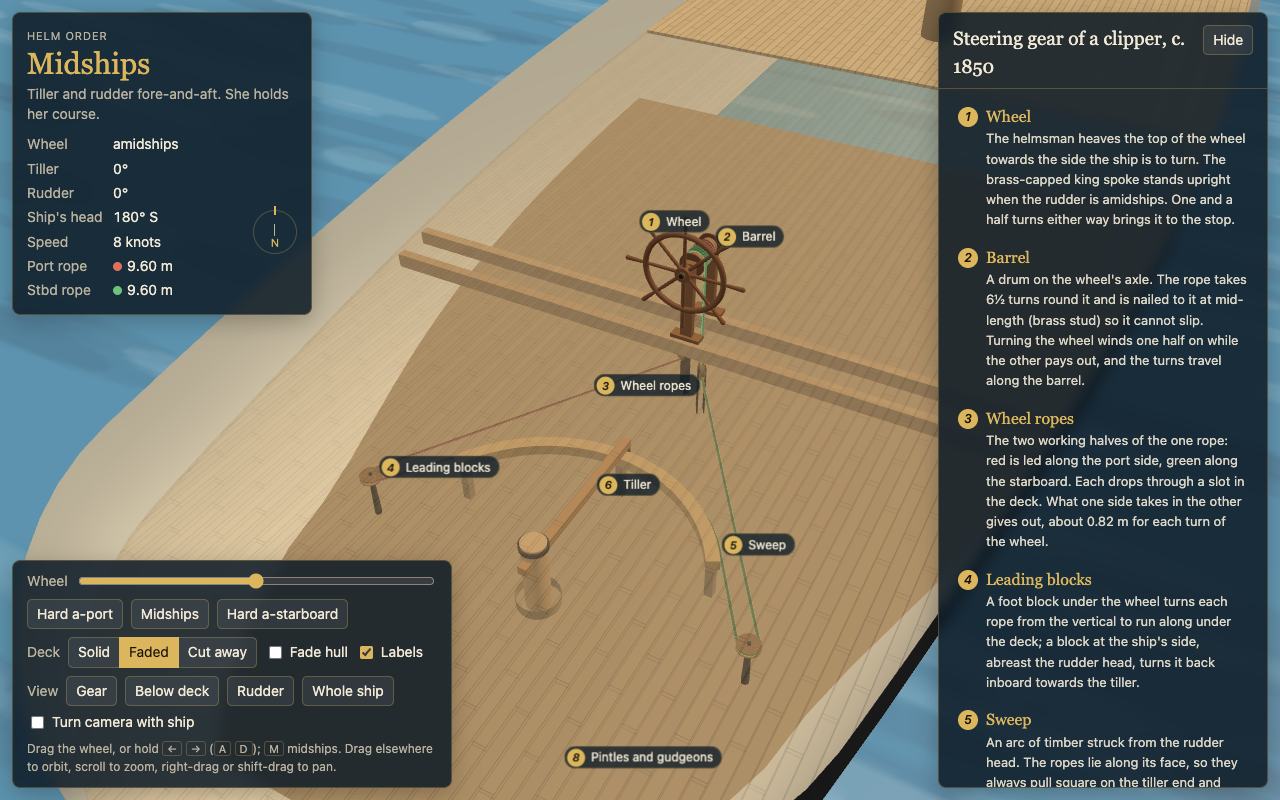
- Rope path is computed analytically: barrel helix, foot block, side block, sweep and tiller lug, with exact pay-out and take-up
- 19th-century rigging and helm orders are correct: Port the helm / Hard a-port / Midships, with the tiller visibly swinging to port
- Blocks turn at speeds that match the rope, the deck has slots where the ropes pass through, and the rudder hangs on modelled pintles and gudgeons
- Strong explanation: numbered 3D labels, a parts guide that flies the camera to each part, a cause-and-effect line under the helm order, and a note on why the orders are reversed
Weaknesses
- Wheel ropes are thin and hard to see at the default zoom
- Default views are dominated by the deck; the rudder and hull form are barely visible without changing the view
- Masts and sails are flat placeholders; the ship looks only roughly like a clipper
- Dense one-line code in places hurts readability